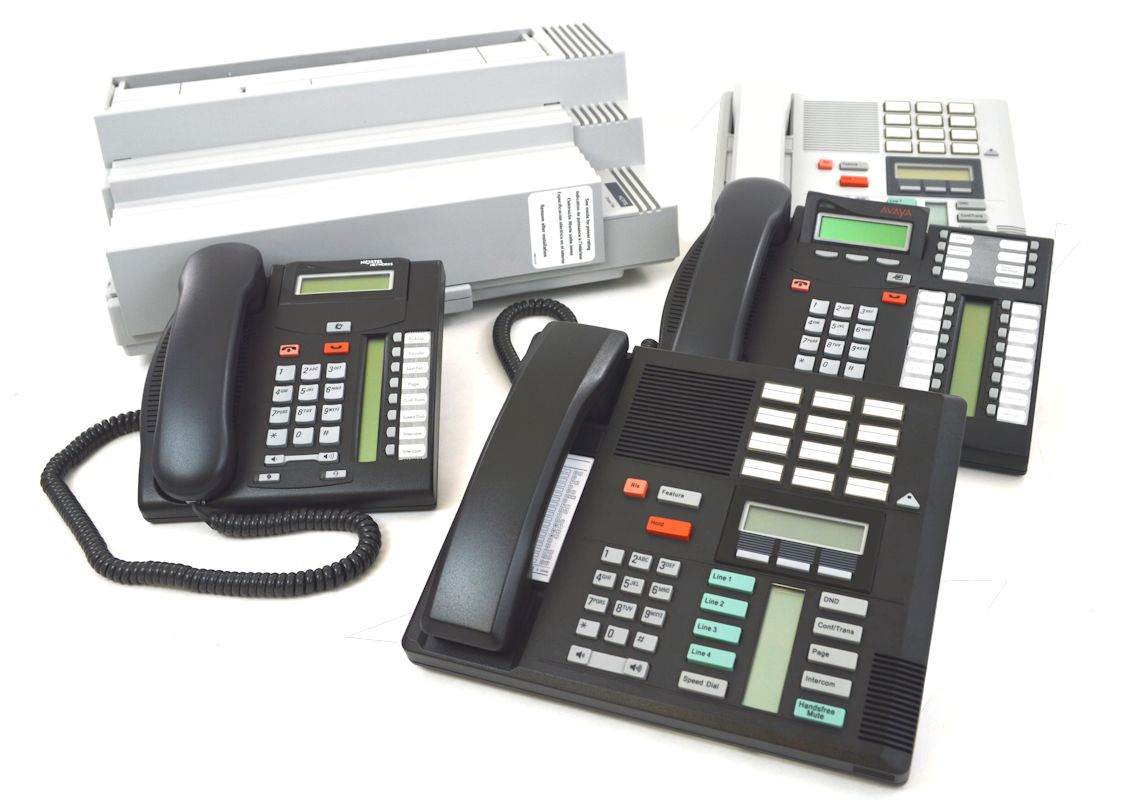
Nortel Norstar Phone System Died | What to Do
It’s a Monday morning. You arrive at the office before anyone else, flip the lights on, and pick up the phone to check messages. Nothing. No dial tone. You try another phone — same thing. You check the equipment closet and see the Norstar CICS sitting there with a blinking amber light where there used to be a solid green one. Your phone system has been running since 1999. It has never had a problem. And right now, every line is dead.
This isn’t a hypothetical. It’s a scenario Phonewire deals with regularly — a small business with a Nortel Norstar that worked reliably for 20-plus years, right up until the morning it didn’t. And when it fails, it tends to fail completely: no dial tone on any extension, no inbound calls, nothing. Customers calling your number hear it ring with no answer. Calls that come in while you’re frantically troubleshooting go nowhere.
Here’s why this happens and why, when it does, recovery is harder than most business owners expect.
Why Nortel Norstar Systems Fail the Way They Do
Nortel went bankrupt in 2009. Avaya acquired the business communications assets but didn’t invest heavily in the Norstar product line — it was already end-of-life. Norstar CICS, MICS, and Meridian systems haven’t been manufactured for decades. Parts stopped being produced years before Nortel went under. The technicians who were factory-certified on these systems have largely retired.
The Norstar platform relies on hardware modules — a KSU (Key Service Unit) cabinet, line cards, station cards, and a power supply. Each of these is an electronic component with a finite lifespan. The capacitors in a 25-year-old power supply will eventually fail. A line card that handles your incoming telephone lines will eventually fail. And because no new parts have been manufactured, replacement means finding a used module on eBay or through a specialty reseller — if one is available at all.
The failure mode is usually one of three things:
Power supply failure. The power supply is the most common single point of failure on older Norstar systems. When it goes, the entire system loses power. Everything goes dark. Nothing rings. All programming may be lost.
Line card failure. The card that interfaces between your telephone lines (or SIP trunks) and the KSU handles all inbound and outbound calls. When it fails, callers hear ringing but nobody answers. Employees can pick up phones but get no dial tone. From the outside, your business appears to be ignoring calls.
Programming corruption. Norstar systems store configuration in battery-backed memory. When the backup battery — often the original battery from the original installation — finally dies, a power interruption can wipe the programming. Extensions lose their settings, call routing disappears, voicemail stops working. The hardware may be fine but the system behaves as if it’s never been configured.
The Scramble
When a Norstar fails in 2026, the scramble goes like this: you call the company that installed it. Either they’re out of business, they don’t support Norstar anymore, or they tell you they’ll look for parts but can’t promise anything. You search online for Norstar CICS repair. You find a few specialty shops, some of which have refurbished modules, some of which don’t have what you need. Shipping takes days. Your phones are down for one day, then two, then three.
Meanwhile, you’re forwarding the main number to a personal cell phone, missing half the calls because it keeps going to voicemail, and explaining to clients why they can’t reach your office. Your staff is texting each other instead of using the intercom. Someone finds out a competitor won a client you’d been working on for months because they “couldn’t get through to you last week.”
This is not the worst case scenario. The worst case is the parts simply don’t exist for your specific module. The system is done. You need a new phone system immediately, on emergency timeline, with whatever’s available in whatever timeframe a provider can move.
What the Right Move Looks Like Before It Happens
The businesses that handle a Norstar failure cleanly are the ones that had already started planning the migration before the failure occurred. Not necessarily already migrated — just planned. They knew what they were going to replace it with. They had a quote. They had a relationship with an installer who could move quickly. When the failure happened, the decision was already made and the installation happened within days rather than weeks.
The businesses that get hurt badly are the ones for whom the failure is also the first time they’ve thought about replacing the system. The decision-making process — evaluating options, getting quotes, choosing a system, scheduling installation, porting numbers — takes time that you don’t have when your phones are already down.
Phonewire replaces Nortel Norstar systems with modern VoIP — either the Phonewire Hybrid on-premises system or cloud-hosted, depending on your team size and preferences. Your existing phone numbers port to the new system. The installation typically takes one day. If you’re in an emergency situation where the Norstar has already failed, Phonewire can mobilize quickly — call (800) 857-1517 and tell us what happened. We’ve done this before.
If you’re not in an emergency yet but you have a Norstar that’s been running since the Clinton administration — this is the call to make now, on your schedule, before Monday morning.
See the full Nortel Norstar replacement guide, or schedule a free consultation and we’ll assess your specific system and give you a quote.